The Case for Planned Maintenance
Most commercial kitchen equipment failures are not truly sudden. In most cases, there are warning signs — gradual performance changes, unusual sounds, minor faults that are noted but not investigated. Preventive maintenance is about catching these early, before they become expensive breakdowns during a busy service period.
The cost of a planned maintenance visit is almost always lower than the cost of an emergency call-out, the parts required for a failure-caused repair, and the operational disruption from equipment being out of service at the wrong moment. For high-turnover commercial kitchens, downtime has a direct financial impact.
What a Preventive Maintenance Visit Involves
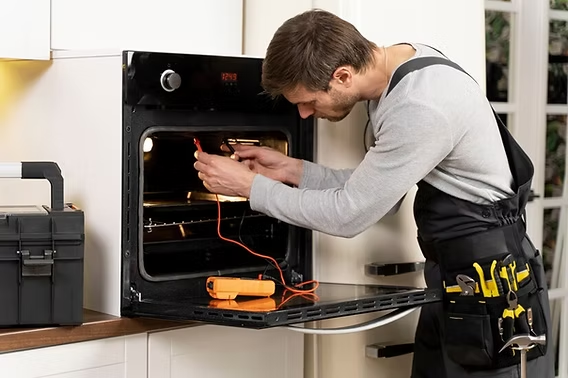
The exact scope of each visit depends on the equipment covered, but a typical planned maintenance call will include the following:
- Visual inspection of the unit, including casing, connections, ventilation, and accessible components
- Cleaning of condenser coils, heat exchangers, filters, and other components where accumulation affects performance
- Checking and calibrating temperature settings against accurate reference measurements
- Testing safety devices including thermostats, overheat cut-outs, and pressure relief valves where applicable
- Inspection of door seals, hinges, and gaskets for wear and deterioration
- Functional test of all operating modes and cycles
- Identification and reporting of components showing signs of wear that may need attention in the near future
- Written service report provided at the end of the visit
Maintenance Schedule Options
Annual
A single planned visit per year, suitable for lower-usage equipment or smaller operations with a limited equipment inventory.
Bi-Annual
Two visits per year, six months apart. The most common arrangement for mid-sized catering operations with moderate equipment usage.
Most PopularQuarterly
Four visits per year. Recommended for high-volume operations, equipment under heavy use, or sites with compliance requirements for more frequent checks.
Who Benefits Most From a Maintenance Plan
Preventive maintenance is relevant for any commercial kitchen, but the value is most apparent in certain types of operation:
High-turnover restaurants and hotels — where equipment runs for long hours and downtime during service is particularly costly. A planned schedule ensures critical equipment is inspected before it fails.
Care homes and healthcare catering — where equipment reliability has direct implications for resident welfare and where regulatory compliance requires evidence of regular servicing.
Contract caterers and multi-site operations — where centralised maintenance management across multiple kitchens is more efficient and cost-effective than responding reactively to individual site breakdowns.
School and education catering — where term-time service continuity is essential and planned maintenance can be scheduled during school holidays.
Documentation and Compliance
A detailed service record is produced after every maintenance visit, noting equipment condition, work carried out, and any recommendations. These records are useful for environmental health inspections, insurance purposes, and equipment warranty management. We can provide documentation in a format that fits your existing record-keeping systems.
Tailored to Your Kitchen: We do not offer one-size-fits-all maintenance packages. We will discuss your equipment inventory, usage patterns, and budget to propose a schedule that makes practical sense for your operation. Contact us to arrange an initial discussion.