Why Refrigeration Repair Requires Prompt Attention
Unlike many pieces of kitchen equipment, a failing refrigeration unit can create immediate food safety risks. Temperature excursions — particularly in units holding high-risk foods — require rapid response and accurate diagnosis. We understand the urgency, and we aim to attend promptly when refrigeration has failed or is performing inadequately.
We service commercial refrigerators, undercounter and upright freezers, walk-in cold rooms and cold stores, blast chillers and shock freezers, display serve-over counters, and commercial ice machines. Our engineers carry refrigerant handling certification as required under UK F-gas regulations.
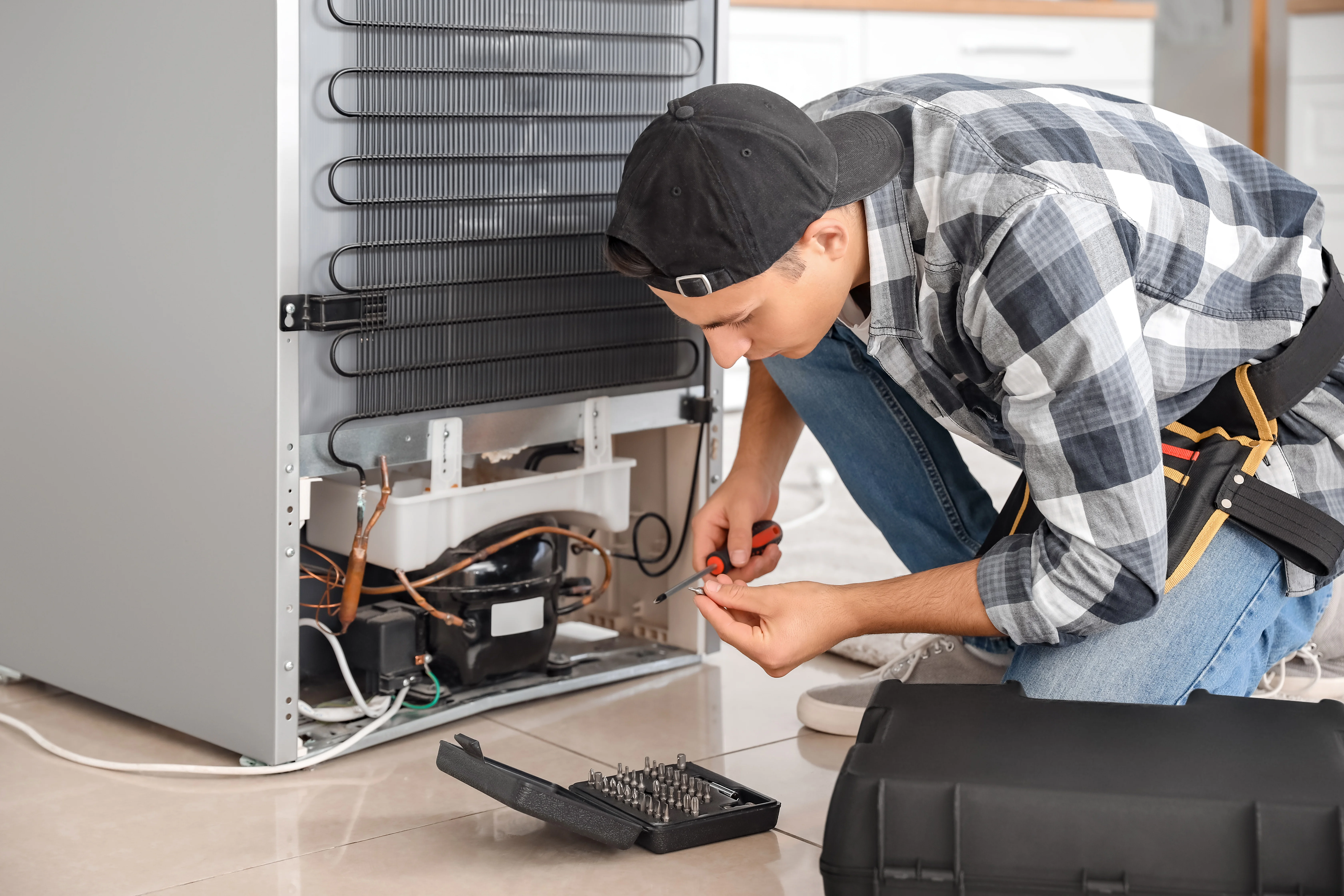
Common Refrigeration Faults
The most critical fault — unit running warmer than set temperature. Can result from refrigerant loss, condenser blockage, thermostat failure, or door seal deterioration.
The most common preventable fault. Grease and debris block airflow, causing the compressor to overwork. Regular cleaning prevents this.
Ice buildup on evaporator coils, often caused by defrost heater failure, door seals letting in warm air, or defrost timer issues.
Rattling, clicking, or buzzing sounds can indicate compressor wear, loose components, or fan motor issues.
Pooling water inside or around the unit, often from a blocked drain, faulty door seal, or drainage system issue.
A failed compressor will prevent refrigeration entirely. We assess whether repair or replacement is the more economical option.
F-Gas Compliance
Refrigeration systems that use HFC refrigerants are subject to F-gas regulations. Any work involving refrigerant handling — including re-charging, leak testing, and recovery — must be carried out by certified engineers. Our technicians hold the relevant F-gas certification and we maintain accurate records of refrigerant use as required by law.
We will advise you clearly if a refrigerant leak is present and whether the level of loss requires formal reporting or record-keeping on your part.
Walk-In Cold Rooms
Walk-in cold rooms present additional complexity compared to self-contained units. Panel integrity, door frame alignment, drainage, evaporator coil condition, and the remote condensing unit all need to be considered as part of any diagnostic assessment. We are experienced in working across all components of walk-in systems and approach them methodically.
If Your Unit Has Failed: If food is at risk, act on temperature immediately — move product if necessary. Document the ambient temperature reading and the time the fault was noticed, as this may be relevant for food safety records. Then contact us as soon as possible.