Maintaining commercial kitchen equipment properly is one of the most effective things a catering operation can do to protect its investment, reduce downtime, and keep service running smoothly. Yet in practice, maintenance is often reactive rather than planned — something that happens when something breaks, rather than to prevent it from breaking in the first place.
This guide sets out a practical approach to kitchen equipment maintenance for professional catering environments, covering daily habits, periodic tasks, and the signs that indicate a professional service visit may be necessary. It is aimed at kitchen managers, head chefs, and operations managers who are responsible for equipment care but may not have a technical background.
Why Maintenance Matters More Than Most Operators Realise
The relationship between maintenance and equipment lifespan is well established in engineering terms, but its implications are sometimes underappreciated in commercial kitchens. A commercial oven that is well maintained — clean burners, calibrated thermostat, intact door seals, clean combustion air paths — can operate reliably for 12 to 15 years. The same oven, neglected, may develop significant faults within five years and require replacement within eight.
The financial case for maintenance is therefore not about the cost of servicing but about the cost avoided: emergency repair call-outs, parts replacement that could have been prevented, food waste from equipment failure during service, and early replacement of assets that should have had several more productive years. For multi-site operations or kitchens with significant equipment inventories, these costs can be very substantial.
Beyond cost, there are regulatory and safety considerations. Commercial gas appliances require annual safety inspections in many professional environments. Refrigeration systems must maintain correct temperatures for food safety compliance. Dishwashers must reach sanitising temperatures. Maintenance is not just good practice — in several areas, it is a legal or contractual obligation.
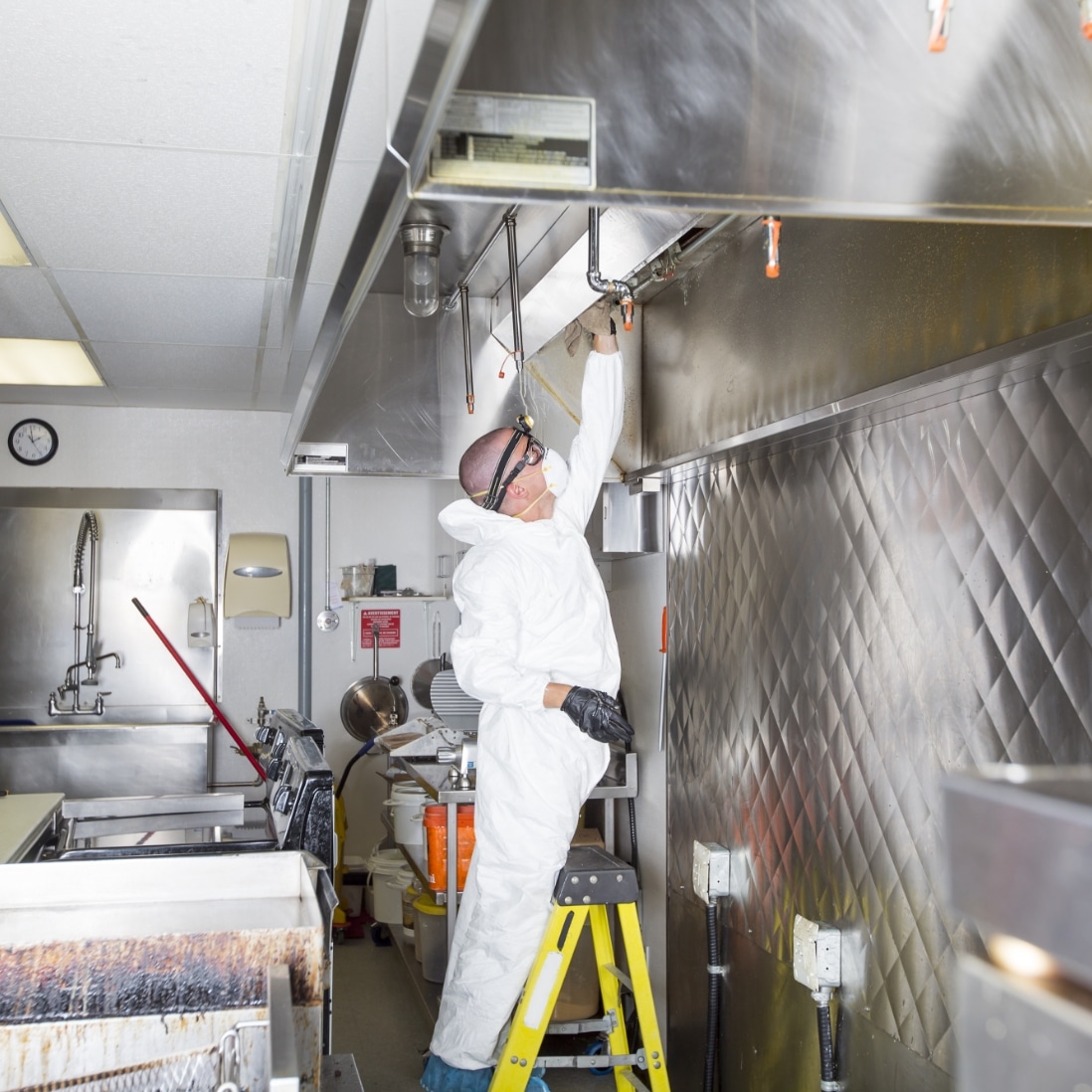
Daily Maintenance Habits That Make a Difference
Good daily habits by kitchen staff are the first line of defence against equipment problems. These do not require technical knowledge — they require consistency and attention.
Ovens and Ranges
The interior of a commercial oven should be wiped down daily while still warm (but not dangerously hot), removing food debris and grease before it carbonises and bakes on. Carbonised residue on oven floors and walls is not only a fire risk — it affects heat distribution and can damage oven interiors over time. Burner ports on gas ovens should be kept clear; blocked ports affect combustion efficiency and can cause uneven heating.
Convection oven filters should be checked and cleaned according to the manufacturer's guidance, typically weekly or more often in high-grease environments. A clogged filter forces the fan to work harder and can cause overheating of the motor.
Refrigeration
Door seals on commercial refrigerators and freezers should be inspected daily for signs of damage, splitting, or mould growth. A deteriorating door seal allows warm, moist air into the unit — causing the compressor to work harder and potentially resulting in ice formation on evaporator coils. Replacing a worn door seal is inexpensive; the damage caused by ignoring a failing seal is not.
The area around and beneath refrigeration units should be kept clear and clean. Condenser coils need adequate airflow to dissipate heat — if they are blocked by stored items or coated in grease and dust, the unit will struggle to maintain temperature and the compressor will be under excessive load.
Dishwashers and Glasswashers
Commercial dishwashers accumulate food debris rapidly. The filters, wash arms, and sump should be cleaned at the end of every service as a minimum — and in busy operations, mid-service cleaning may also be necessary. Blocked spray arm jets are one of the most common causes of poor wash results and are entirely preventable with routine cleaning.
Rinse aid and detergent levels should be checked daily, and the chemical dosing system should be verified to ensure it is drawing correctly. Incorrect dosing — either too much or too little — affects wash quality and glassware condition.
Periodic Maintenance Tasks
Beyond daily habits, certain maintenance tasks need to be carried out on a weekly, monthly, or quarterly basis. Some of these can be done by kitchen staff; others require a qualified technician.
Weekly
- Deep clean oven interiors, including removing racks and cleaning rack supports
- Descale dishwasher and glasswasher interiors, wash arms, and spray heads
- Clean around door hinges and door seals on all refrigeration equipment
- Check and clean grease traps and drain channels
- Inspect gas connection hoses for signs of wear or damage (visual inspection only)
Monthly
- Clean condenser coils and ventilation grilles on refrigeration units (with appropriate cleaning tools — do not use water)
- Check refrigeration temperatures against a calibrated thermometer to confirm the unit is maintaining the set point accurately
- Inspect oven door hinges and seals for wear and proper alignment
- Clean combi-oven boiler and water injection systems as per manufacturer guidance
- Check dishwasher water softener salt levels and replenish if required
Quarterly or Bi-Annually
- Professional service visit covering calibration, safety checks, and component inspection
- Gas appliance safety inspection (annually at minimum — more frequently for high-use appliances)
- Refrigerant leak check on refrigeration systems
- Deep descale of combi-oven steam systems
- Inspection and testing of safety thermostats and cut-out devices
Recognising Early Warning Signs
Kitchen staff are best placed to notice when equipment behaviour changes — but only if they know what to look for. Encouraging kitchen teams to report anomalies promptly is an important part of any maintenance culture.
Key warning signs to report immediately: Gas smell near any appliance; sparking or burning smell from electrical equipment; a refrigeration unit that is noticeably warmer than usual; any appliance displaying an error code or alarm; unusual noises (particularly clicking, grinding, or persistent running without cycling off); water pooling around equipment.
Many of these signs indicate faults that are minor and inexpensive when caught early, but can become much more serious — and costly — if ignored. Establishing a simple reporting system, even just a whiteboard or note in a log book, helps ensure nothing is overlooked in the pressure of service.
What Kitchen Staff Can and Cannot Do
There is an important distinction between maintenance tasks that kitchen staff can carry out safely and those that require a qualified technician. Cleaning, filter replacement, checking temperatures, and basic operational checks are appropriate for trained kitchen staff. Gas-related work, electrical component replacement, refrigerant handling, and any internal component repair must only be undertaken by appropriately qualified engineers.
Attempting internal repairs without proper training and qualifications is not only dangerous — it can invalidate equipment warranties and create liability issues in the event of an incident.
Building a Maintenance Culture
The most effective maintenance programmes are not just schedules — they are habits embedded in the daily culture of a kitchen. Head chefs and kitchen managers play a key role in setting the standard. When maintenance is treated as an afterthought or an inconvenience, it rarely gets done consistently. When it is part of the closing routine and opening checks, it becomes second nature.
A simple kitchen equipment log — noting any anomalies, cleaning tasks completed, and any concerns flagged — provides a useful record and ensures that information is not lost between shifts. It also provides useful context for a technician when a fault does need to be investigated professionally.
Regular professional servicing should be built into the annual budget as a planned cost, not treated as a surprise expense when something breaks. The predictability of planned maintenance is one of its primary financial advantages.
Working With a Service Provider
Choosing a reliable commercial kitchen equipment service provider and building a working relationship with them over time has significant advantages. A technician who is familiar with your equipment — its age, its history of faults, any known quirks — is better placed to diagnose efficiently and advise intelligently than one attending a site for the first time.
When arranging a maintenance contract, look for transparency around what each visit covers, clear documentation provided after each call, and honesty about what needs attention now versus what can be monitored. A good service provider will not manufacture work — they will give you a clear picture of your equipment's condition and let you make informed decisions.